
Group therapy at Kolmac The backbone of outpatient behavioral health care
It helps because you are not the only one. Group therapy is the core of how Kolmac delivers outpatient care, and for good reason. Hearing how others are working through the same patterns, setbacks, and progress builds accountability and perspective that individual sessions alone cannot replicate.
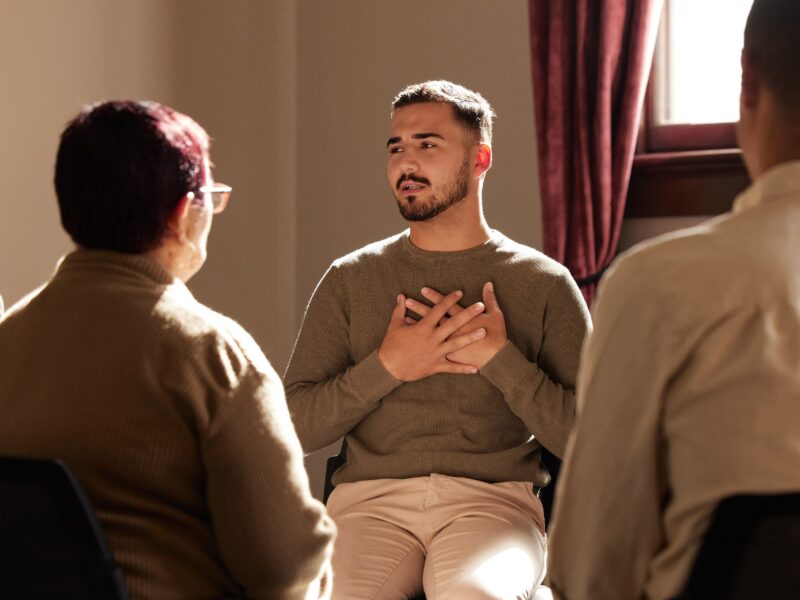
Why group therapy works
We are wired for connection. When people isolate and refuse to let others see what they are carrying, unhealthy coping tends to fill the gap. Group therapy interrupts that cycle. It keeps you connected to people who understand what you are going through, which is one of the strongest predictors of lasting progress.
The benefits of group therapy are well established in both research and decades of clinical experience:
- Structure and peer support that sustain progress after the most intensive phase of treatment
- Connection and community that reduce the isolation common to substance use and mental health conditions
- Encouragement that comes from seeing others further along in their recovery
- A place to learn and practice healthy coping strategies in real time
- A clearer understanding of the biological, social, and psychological factors behind what you are experiencing
Group therapy for substance use and mental health
Group work is central to treatment for both substance use disorders and mental health conditions. Groups are organized so that members are working through similar challenges, whether that is early recovery, anxiety and depression, trauma, or co-occurring conditions. The clinical work is grounded in evidence-based approaches like cognitive behavioral therapy (CBT), dialectical behavior therapy (DBT), and relapse prevention.
What to expect in a Kolmac group
Groups are built into our intensive outpatient and partial hospitalization programs, and they continue through continuing care as you step down. Sessions are small, typically 10 to 12 people, so there is room to participate without feeling lost in a crowd. You set the pace for what you share, and the work becomes more comfortable as trust builds.
Led by licensed clinicians
Every Kolmac group is led by licensed or certified clinicians trained in group process and behavioral health. Effective group facilitation takes real expertise, in managing group dynamics, keeping sessions purposeful, and tailoring the work to where the group is in treatment. With more than 50 groups across our locations, in person and virtual, you can find a schedule that fits your life.